Social media connects billions of people every day. It allows users, creators, and businesses to share ideas, stories, videos, and updates with audiences worldwide. As these platforms continue to grow, they make communication faster, easier, and more engaging.
However, this convenience also attracts cybercriminals. Many scammers create fake social media profiles that imitate real individuals or well-known personalities. These impersonation accounts often deceive users, steal personal information, or commit financial fraud. Therefore, identifying fake profiles has become more important than ever.
Fortunately, face search provides an effective way to detect social media impersonation accounts, verify identities, and uncover fraudulent profiles before they cause serious harm.
What Are Impersonation Accounts?
Impersonation accounts are fake social media profiles that use someone else’s photos, name, or personal information to appear genuine. Cybercriminals create these accounts to gain users’ trust and deceive people across various social media platforms.
These fake profiles are commonly used to:
- Scam users into sending money or sharing sensitive personal information.
- Damage reputations by posting misleading, offensive, or harmful content under someone else’s identity.
- Carry out phishing attacks by encouraging users to click malicious links or disclose confidential information.
- Exploit fans by impersonating celebrities, influencers, or public figures to gain followers and profit from their popularity.
These tactics are also common in catfishing scams, where fraudsters build fake romantic or personal relationships using stolen identities.
The biggest challenge is that these accounts often look authentic. A stolen profile photo, copied bio, realistic posts, and even purchased followers can make a fake account appear trustworthy. As a result, many users struggle to distinguish genuine profiles from fraudulent ones.
Facial Recognition Technology: A Brief Introduction
Facial recognition technology is an advanced AI-powered system that identifies and verifies individuals by analyzing their unique facial features. Unlike traditional image recognition, which evaluates the entire image, facial recognition focuses exclusively on the distinct characteristics of a person’s face.
These unique facial attributes include:
- Eye shape and spacing
- Geometrical structure of the nose and mouth
- Tone and texture of skin
- Outlines and symmetry of faces
Once these features are analyzed, the system converts them into a unique digital facial signature. It then compares this signature against faces stored in its database or other searchable sources to identify potential matches. This process makes face recognition highly effective for detecting duplicate or stolen profile photos used in impersonation accounts.
Over the years, technological advancements in facial recognition have made these systems faster and far more accurate.
How Facial Recognition Technology Works
Facial recognition technology uses computer vision and Artificial Intelligence algorithms to analyze facial features from an uploaded image and find similar faces across the web. It compares these patterns to identify matching images from sources like search platforms, social media, and websites, helping detect duplicate or impersonation accounts quickly and accurately.
The entire process involves several steps:
1. Image Upload
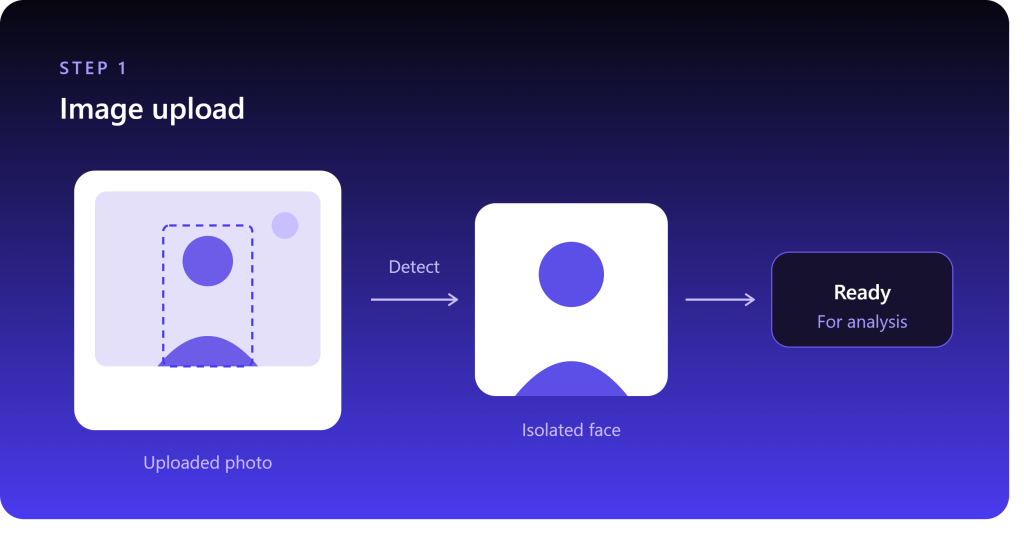
The process begins when a user uploads an image; the system isolates the face from the background and prepares it for facial analysis.
2. Extraction of Facial Features
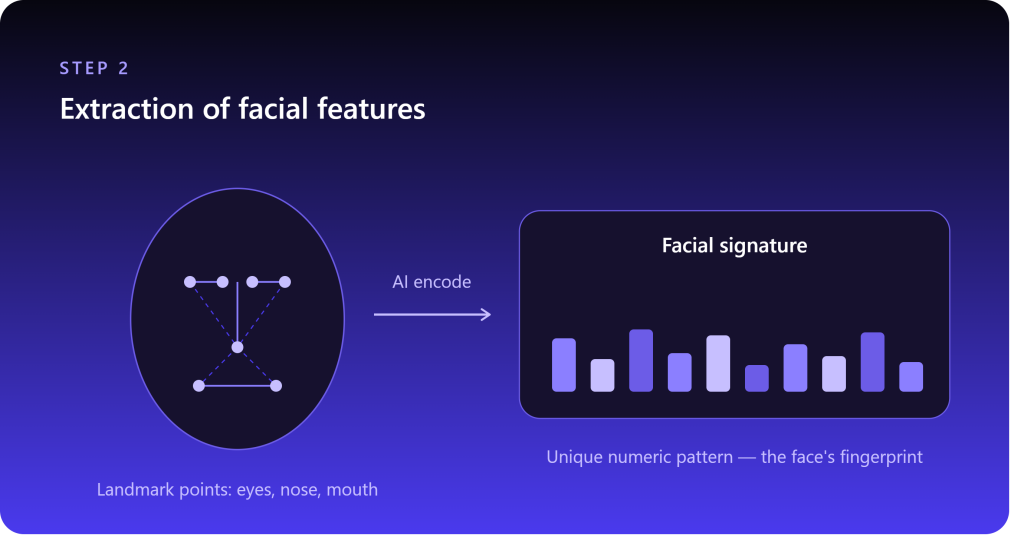
After receiving the image, AI algorithms analyze the face to identify unique characteristics. These include facial structure, eye placement, nose shape, mouth geometry, and other details. These characteristics are converted into a unique digital signature that acts as a reference point for finding similar faces.
3. Database Comparison
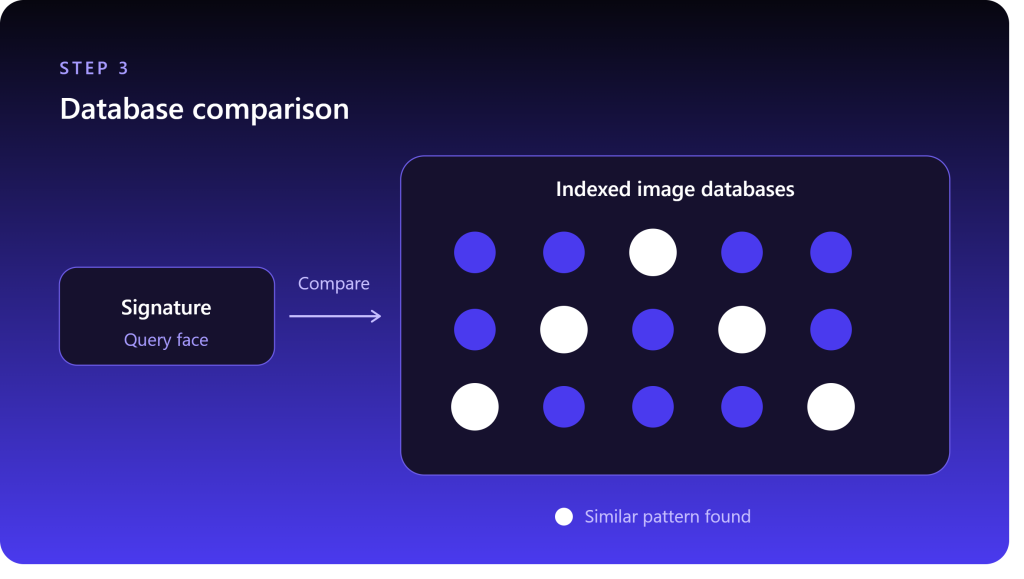
Once the facial signature is generated, the system compares it against billions of indexed images available across different databases. It looks for faces with similar patterns and characteristics to identify possible matches.
4. Matching and Ranking
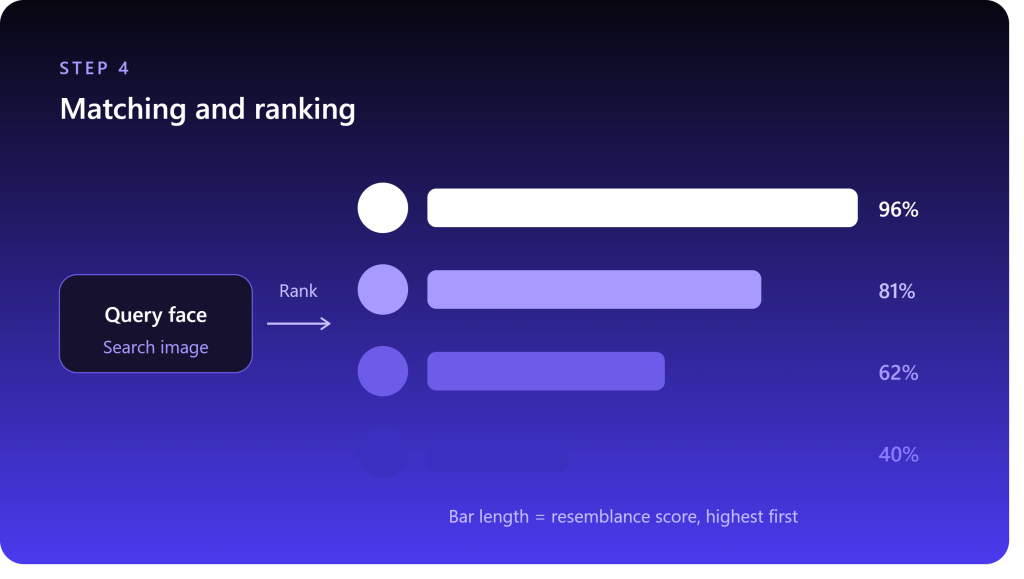
After completing the comparison process, the system identifies images with similar facial features and categorizes them based on their resemblance to the face captured in the search query image.
5. Verification of Results
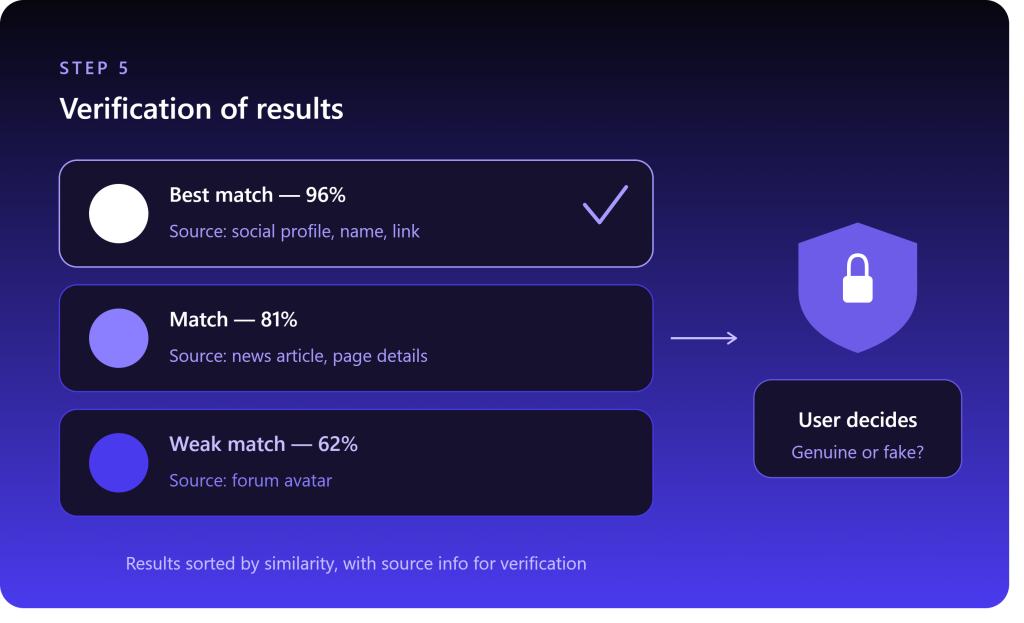
In the final stage, the system presents matched images along with their source information and relevant details. It organizes the results by similarity, so the most relevant matches appear first. This helps users determine whether a profile is genuine or being used for impersonation.
Facial Recognition for Impersonation Detection: Real Uses
Facial recognition technology offers multiple benefits when it comes to detecting impersonation and protecting digital identities. By analyzing facial similarities across online platforms, this advanced technology helps individuals, businesses, and organizations identify fake profiles and prevent identity misuse.
1. Personal Identity Protection
Individuals can use this technology to check whether their personal photos are being used without permission across the internet. By detecting unauthorized use of images early, users can take appropriate action to prevent identity theft, scams, and reputational damage.
2. Safeguarding Celebrities and Influencers
Public figures, celebrities, and influencers are common targets of impersonation attacks. Facial recognition technology helps monitor online platforms, identify fake fan pages, and detect fraudulent social media accounts created to exploit their fame.
3. Brand Security
Businesses also face significant risks from impersonation tactics. Cybercriminals may create fake employee profiles, duplicate brand pages, or impersonate company representatives to deceive customers. Companies can use the technology to quickly detect online cloning of their official representatives and monitor unauthorized use of their brand visuals across the web.
4. Law Enforcement & Cybersecurity
Law enforcement authorities and cybersecurity teams can leverage facial recognition technology to investigate organized impersonation networks. It helps uncover fraud operations and identify groups involved in impersonating public figures, brands, or trusted individuals.
Over to You:
Detecting impersonation accounts across social media platforms is no longer a difficult task with the help of facial recognition technology. It simplifies the process of identifying fake profiles by uncovering accounts that use the same photos, names, or personal details. By revealing potential impersonation attempts, this technology helps users protect their identities, avoid scams, and maintain a safer online presence.