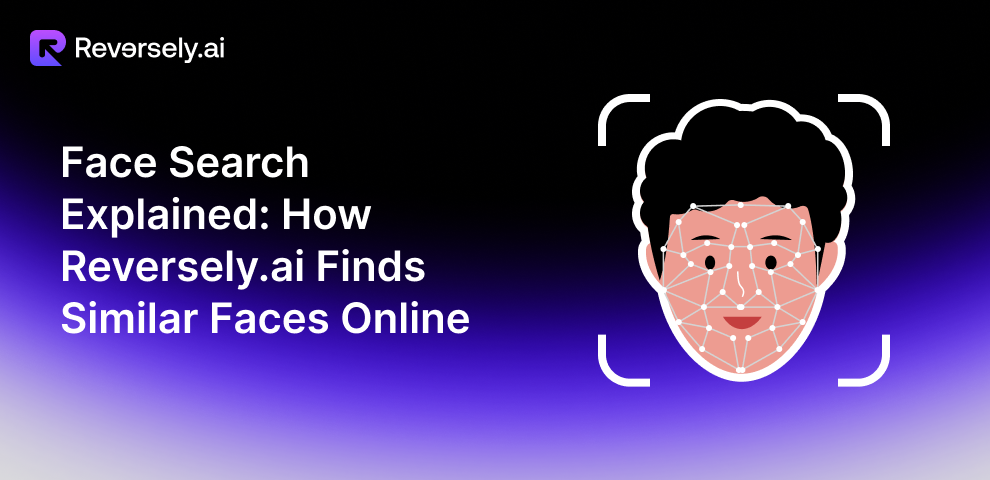
Face search is an advanced form of reverse image search that identifies similar facial features across multiple online platforms. This technology uses advanced facial recognition algorithms to analyze uploaded photographs and locate matching images across the internet.
Face search examines distinct facial characteristics and geometric patterns to establish matches across various sources and public databases. This guide explains the advanced facial search processes available on the Reversely.ai platform.
What Is Face Search Technology?
Face search technology, or facial recognition, identifies individuals in images by analyzing key facial features. The system examines uploaded images and matches them with extensive online image databases.
The technology works through several key functions:
- Facial mapping that examines eye spacing, nose dimensions, and jaw structure
- Database scanning against billions of stored images from various websites
- Pattern recognition that identifies the same person across different images
- Advanced algorithms that work despite changes in lighting or photo angles
Face search analyzes facial features in uploaded photos and converts them into digital signatures. These signatures are then compared with large online image databases to find exact matches. This process helps identify where a specific person appears across different platforms and websites, making it useful for various identification purposes.
How Reversely.ai Face Search Works
Reversely.ai employs advanced algorithms to perform accurate facial searches. The process follows three key stages:
1. Image Processing and Analysis
The system begins by isolating facial areas from the uploaded image and performing digital analysis. It then identifies faces by examining facial structure, surface characteristics, and geometric proportions during the initial processing stage.
2. Feature Mapping and Algorithm Processing
The advanced detection technology extracts key facial characteristics, including eye position, nose size, mouth position, and jawline structure, along with their spatial relationships. These facial elements are converted into mathematical representations that enable algorithmic comparisons.
3. Database Scanning and Matches Identification
The final stage compares the extracted facial data with stored information in extensive image databases. The system searches through known facial patterns to find the most accurate matches and then presents the results to users.
Technology Behind Reversely.ai Facial Recognition
Reversely.ai uses advanced Machine Learning & Deep Learning algorithms to analyze facial structure and the geometric relationships between features. It analyzes stable biological markers that remain consistent across different environments and photographic conditions. This allows our tool to maintain accurate recognition even when appearance changes due to styling variations or lighting differences.
Step-by-Step Guide to Use Reversely’s Facial Search
The platform provides a systematic approach for conducting facial recognition searches through its interface.
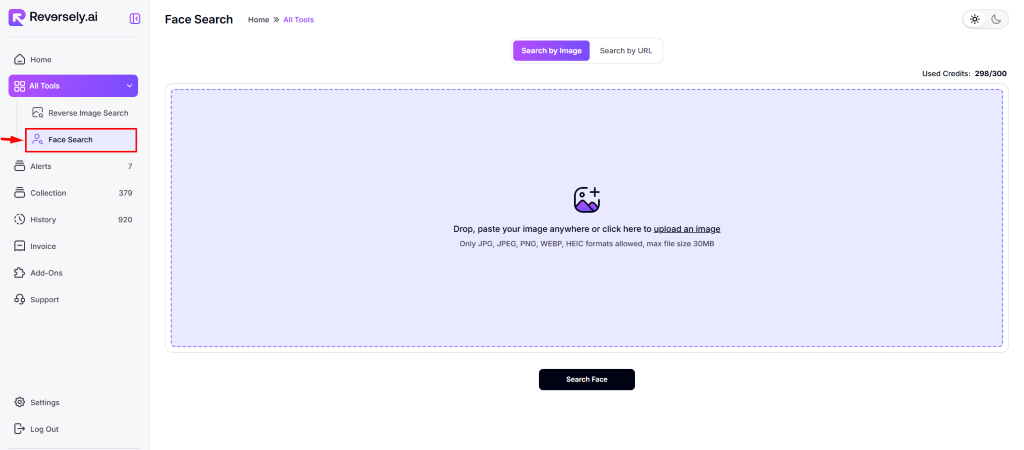
Step 1: Access the Tool
Visit Reversely.ai and open the face search tool from the sidebar menu. This will take you to the dedicated interface.
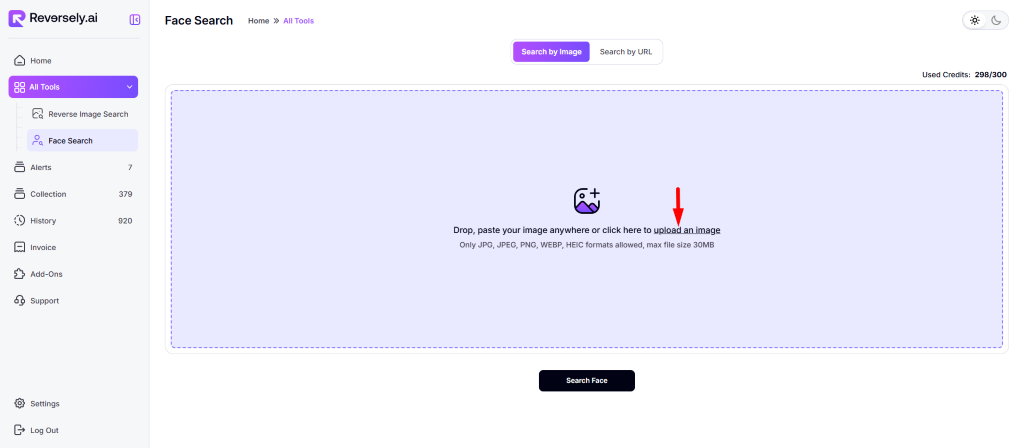
Step 2: Upload a Photo
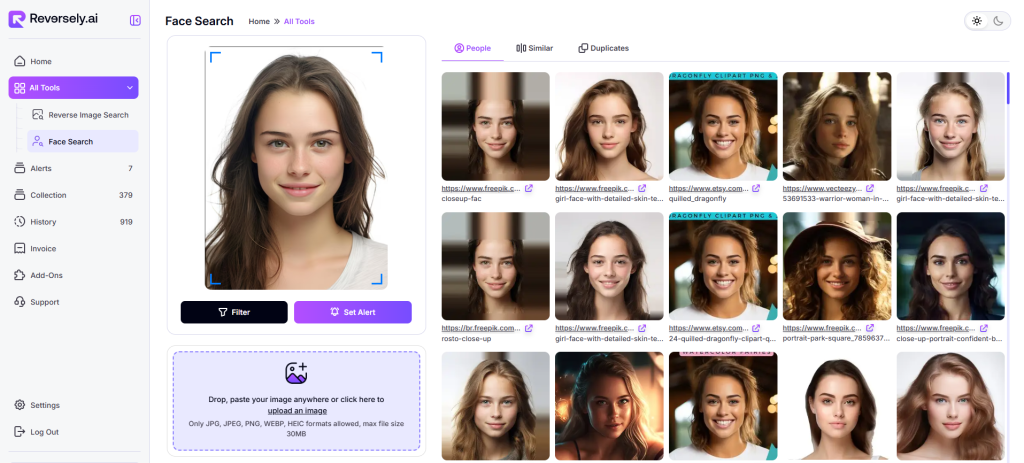
Drop or paste your image anywhere on the tool, or simply click the upload button to choose an image from your device.
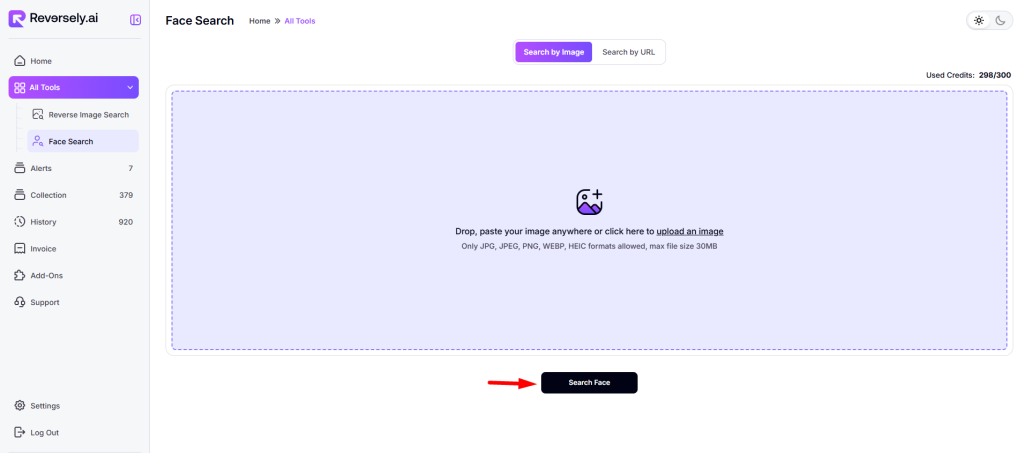
Step 3: Start the Process
Begin the search by hitting the “Search Face” button. The tool will start the facial features analysis using the provided image data.
Step 4: Get Instant Results
All matching faces found across various online sources will appear on your screen instantly. Each result shows thumbnail previews and source info for reference.
Tips to Get Better Face Search Results
Follow these tips to enhance your facial search outcomes and obtain more precise matches.
Image Quality Matters
Clear, well-defined images improve search results accuracy. Proper lighting and high-resolution photos allow for detailed analysis of facial characteristics, while direct facial orientation provides more accurate recognition than angled positions.
Single Face Focus
While the tool can efficiently detect multiple faces, focusing on one person per search gives more accurate results. Crop your image to show mainly the face you want to search for.
Remove Obstructions
Unobstructed facial areas enable the recognition system to analyze all features completely. Objects in the photo that cover parts of the face can reduce the algorithm’s accuracy. Clear visibility of facial landmarks enables comprehensive data extraction for precise matching.
Privacy Considerations
Reversely.ai prioritizes user privacy. All the uploaded images are processed only for the search purpose and not stored permanently. This ensures your photos remain safe while still benefiting from accurate face matching.
Sum Up:
Reversely.ai face search is transforming how individuals locate and track facial appearances across the web. This comprehensive guide explains the systematic process for conducting effective facial recognition searches using advanced algorithms. The three-stage methodology ensures accurate identification across extensive online databases.
The combination of sophisticated facial recognition algorithms and vast database coverage makes Reversely.ai an effective platform for modern digital identification needs. You can get the best outcomes by following recommended guidelines and ensuring compliance with applicable privacy standards when using facial recognition platforms.